
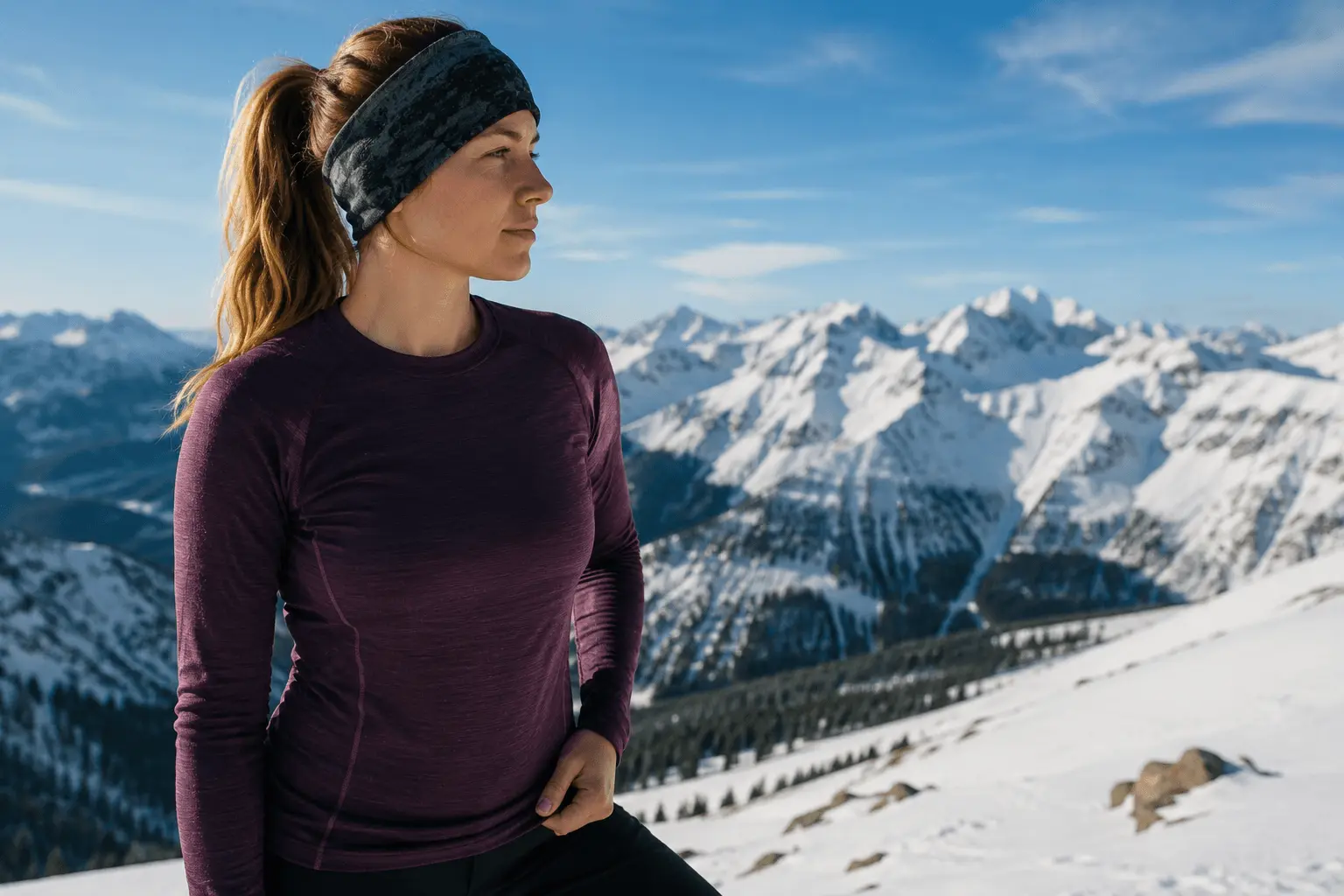
I still remember the first time I underestimated a base layer before a chilly morning run in the hills — I thought any old top would do, and I was wrong within twenty minutes. That’s when I understood why base layers are treated as an essential component of any serious layering system.
Whether you’re planning mountain adventures, chasing winter adventures across snowy peaks, or just braving a nip in the air during colder months, the right women’s baselayers work quietly underneath everything else, managing warmth, comfort, and breathability so your mid layer and protective shell jacket can do their jobs properly.
Our team has tested, rated, reviewed, and photographed dozens of models in 2026, and we’ve built a sort tool to help you rank them by whatever priorities matter most to you, be it wicking moisture, insulation, odor resistance, or plain old durability.
The material behind a great base layer usually comes down to merino wool, polyester, or a smart blend of the two, and each option brings its own trade-off between weight, price, and performance next to the skin.
If you’re adventuring outdoors on a budget, there are solid budget-friendly picks that still deliver on cold weather hiking days, while those chasing top-of-the-line performance for summiting or long nights outside will want to check our favourites list first.
A dependable base layer doesn’t just sit there; it actively helps regulate body temperature, holding off chilly winter winds so you stay warm outdoors without overheating, which is exactly why we treat this piece of kit as anything but an afterthought.
Finding the Baselayer That Actually Works for You
Finding the Baselayer That Actually Works for You
- Think of your baselayers as the layer that touches you first.
- Whatever you throw over it for winter hiking or skiing, this piece of clothing sits closest to your body and decides how the rest of your day feels.
- Choose fabric that will stay warm even when it’s wet.
- Avoid cotton if you’re heading into the snow.
- Wool or a synthetic material tends to work best because both retain heat even when soaked through.
- Merino wool or wool blends are usually a good choice for most conditions on the trail.
- A solid baselayer should hold up over several seasons without wearing through.
- It shouldn’t pill after a few washes.
- It needs to hold its warmth without fuss.
- The pieces that keep you warm best should also stay comfortable enough to wear all day, no matter how long you’re out in the cold.
Quick Answer
Choosing the best women’s baselayer comes down to material, fit, and how you plan to use it. Merino wool remains the top choice for warmth, odor resistance, and comfort against skin, while synthetic blends like polyester or nylon add durability and faster drying speed.
For premium all-around performance, the Icebreaker Merino 200 Oasis Crewe and Ibex Woolies Pro Tech Crew stand out for softness and comfort, while the Smartwool Intraknit Thermal and Stio Trax Power Grid excel for high-output, sweat-heavy activities thanks to their breathable synthetic blends. Budget-conscious hikers should look at the REI Co-op Midweight or Merino.tech 250 Crew, both offering solid performance without the premium price tag.
For technical, cold-weather missions, the Arc’teryx Rho Hoody delivers exceptional warmth and layering versatility, though at a higher cost.
Ultimately, the right baselayer depends on your priorities — whether that’s warmth for alpine days, breathability for aerobic activities, or affordability for occasional use. Testing across warmth, comfort, durability, and drying speed shows there’s no single “best” option, just the best fit for your specific winter adventures and budget.
1. Icebreaker Merino 200 Oasis Crewe — Women’s
If you’re after a high-quality base layer that feels good enough to wear every day, the Icebreaker Merino 200 Oasis Crewe deserves a spot on your shortlist. Built from 100% Merino wool, its construction is soft right against the skin, and after running it through several rounds of testing, our testers kept coming back to how ultrafine and super soft fibers made the whole thing feel less like technical gear and more like a favorite everyday top.
Those fibers are tightly woven, which makes the fabric more durable and turns it into an effective layer for containing body heat and wicking moisture away when you’re working hard. One of our lead tester’s favorite details is how the snug fit holds its shape even after multiple days of wear between washes, which says a lot for such a simple design.
What really stands out is how well this piece performs across different situations. It works as a complement to a full cold-weather kit, but it’s just as capable as a standalone layer during fall or spring months, or on a lazy day waiting out a storm at home.
Numbers only tell part of the story, but they’re worth a look before you buy. This layer scores a solid 7.5 for warmth and 8.0 for breathability, which lines up with what our testers felt on the trail warm enough without turning into a sweat trap.
Comfort and fit land at an impressive 9.0, easily the standout number here, while durability matches breathability at 8.0. Drying speed is the weak point at just 6.0, and layering ability rounds things out at 8.0 as well, confirming this piece slots in easily under a shell or over another top.
Specifications
- Midweight fabric for versatile layering.
- Made from the 100% Merino wool.
- A slim fit sits close to the body.
- Naturally odor-resistant fabric.
- Available in crew and 1/2 zip neck cuts.
Pros
- Great warmth-to-weight ratio and easy to layer.
- No odor even after repeated wear.
- Superb fit and durability held up well in testing.
- 100% Merino fabric stayed super soft.
Cons
- It’s expensive.
- It’s not warm enough to wear alone in the coldest conditions.
- It takes a long time to dry when soaked.
2. Smartwool Classic All-Season Merino — Women’s
I reached for the Smartwool Classic All-Season Merino on a whim one season, expecting a decent budget pick, and came away genuinely impressed. It’s a super lightweight base layer that sits at an affordable price, making it a great addition to any activity-heavy winter wardrobe.
It’s constructed from 88% Merino wool and 12% nylon, which puts it among the lightest base layers we’ve tested all season. That core-spun nylon does more than just save weight it enhances durability and adds to the overall structure of the layer, making it a great choice worn under a bib for regular runs on the ski hill, or as a top when hiking on crisp fall days.
The details matter here too. The combination of merrow stitch and flatlock seams prevents chafing, which you’ll notice the moment you strap on a heavy backpack and start moving. Our lead tester put it simply: the fabric is naturally odor-free, and it keeps the layer fresh even after multiple times of wear between washes.
On performance, it scores a modest 5.0 for warmth, but jumps to 8.0 for both breathability and comfort and fit. Durability sits at 7.0, drying speed hits 8.0, and layering ability tops the chart at 9.0, numbers that back up why this stays a go-to pick for anyone layering up on the move.
Specifications
- Lightweight fabric for easy layering.
- 88% Merino wool and 12% nylon core blend.
- Merino jersey construction.
- Regular fit for easy movement.
- Naturally odor-resistant odor control fabric.
- Available in a classic crew cut.
Pros
- Great fit with thoughtful seams for comfortable wear.
- Soft Merino provides excellent next-to-skin comfort.
- Excellent for layering in changing conditions.
- Highly breathable for active use.
- Fast drying speed helps when conditions change.
Cons
- Thin Merino wool can have durability issues over time.
- It lacks warmth as a stand-alone piece in colder conditions.
3. Smartwool Intraknit Thermal Merino
For anyone who runs hot on the trail, the Smartwool Intraknit Thermal Merino, priced at $150, is worth a close look. Its merino-polyester blend paired with mesh ventilation makes it ideal for fast-paced activities in cold weather, and it’s genuinely one of the only merino base layers we’ll reach for when we know we’re going to sweat hard.
That said, it’s not without trade-offs.The price is high, and the skin-tight fit won’t suit everyone’s taste. The real benefit of this layer comes down to its construction a mix of 53% merino, 45% polyester, and 2% elastane which makes it noticeably more durable than base layers with a higher merino content. We’ve put this to the test ourselves, and our crew neck version has yet to show any thin spots or holes, even after heavy use underneath both a fanny pack and a full backpack, which says a lot about how it holds up over time.
On the numbers, it scores 4/5 for both warmth and breathability, while durability sits a bit lower at 3.5/5. Comfort and odor resistance both land at 4.5/5, though sustainability trails behind at just 2.4/5 a mixed bag worth weighing against everything else it gets right. Specifications
- Midweight fabric for warmth and easy layering.
- Merino wool and polyester blend for comfort and durability.
- Slim fit for a close, athletic feel.
- Intraknit™ construction for targeted warmth and ventilation.
- Integrated mesh ventilation for improved breathability.
- Naturally odor-resistant fabric for repeated wear.
Pros
- The merino-polyester blend with mesh ventilation is breathable and quick-drying.
- The refined fit and long hem help prevent the layer from riding up.
- It’s more durable than 100% merino base layers.
- It remains odor resistant after repeated wear.
Cons
- The super snug fit isn’t for everyone.
- It runs expensive compared to other options on this list.
4. REI Co-op Midweight
The REI Co-op Midweight is a genuinely affordable, no-frills base layer that’s built to last, and it’s easy to see why it’s become a go-to for casual layering. It gets the job done for casual users, though it’s worth being upfront that it’s not a standout when it comes to comfort, breathability, or warmth compared to pricier options.
REI is best known as a retailer of outdoor goods, but its in-house products have quietly earned a reputation for consistently good value, and this piece is a good example why. At just $55, it ranks among the most affordable base layers on this list, yet it still delivers excellent performance for resort skiing, snowshoeing, and other winter uses. Its simple design, a plain crew neck with thumb loops really shines when worn as part of a full layering system rather than as a standout piece on its own.
That said, it’s classy and casual-looking enough that you could easily pair it with favorite jeans on a day off the trail.
On the numbers, it scores 3/5 for warmth, 3.5/5 for both breathability and durability, and 4/5 for comfort. Odor resistance sits at 3/5, but sustainability stands out with a strong 5/5, a nice reminder that budget-friendly doesn’t have to mean corner-cutting. Specifications
- Midweight fabric for warmth and easy layering.
- 92% recycled polyester and 8% spandex blend.
- 220 g/m² fabric weight for added warmth.
- Moisture-wicking fabric helps keep you dry.
- UPF 50+ sun protection for added coverage.
- Stretchy construction for comfortable movement.
Pros
- Very affordable at just $55.
- Midweight fabric feels substantial and holds up well to regular wear.
- Generous length makes the top easy to tuck in without riding up.
Cons
- It’s not as warm as similar-weight merino base layers.
- The material can feel slightly scratchy for those with sensitive skin.
- The simple design lacks advanced fabric technology and added features.
5. Merino.tech 250 Crew — Women’s
If you’re after a super low-budget option, the Merino.tech 250 Crew is one we’d genuinely recommend to anyone who just needs a warm top for a quick ski trip or one-off winter getaway, rather than someone looking to build out a full cold-weather wardrobe for regular use.
This midweight crew is not our top choice for high-intensity cold-weather sports or frequent use, but it’s still constructed from a nice, thick 100% Merino wool that delivers welcomed additional warmth on cold days.
That thicker fabric also does double duty, since it increases durability and leaves the layer noticeably more resistant to microholes and tears the trade-off being that it’s not quite as soft as some pricier alternatives. The relaxed fit runs true to size and is genuinely easy to layer over, which makes it a smart, low-cost choice whether you’re heading out for an occasional resort turn, tackling a shoulder-season hike, or just settling into a relaxed winter day at home by the fire.
On the numbers, it scores 7.5 for warmth, 5.0 for breathability, 7.0 for comfort and fit, 6.0 for durability, and another 5.0 for drying speed, while layering ability rounds things out at 8.0. Specifications
- Midweight fabric for warmth and layering.
- 100% Merino wool for natural warmth and comfort.
- True-to-size fit for a reliable fit.
- Naturally odor-resistant odor control fabric.
- Available in crew and 1/4-zip cuts.
Pros
- It’s affordable and layers easily.
- The fabric is durable and holds up well over time.
- Raglan sleeves provide an increased range of motion.
- It stays odor resistant after repeated wear.
Cons
- It has a slow drying speed, especially after heavy sweating.
- Thick seams can detract from comfort.
- The fabric lacks the customary softness of Merino wool.
6. Arc’teryx Rho Hoody — Women’s
After testing several versions over many years, I can confidently say the Arc’teryx Rho Hoody outperformed the competition on some of the hardest-hitting days we’ve faced on the mountain. This hoody is crafted for more technical endeavors, built around a super slim fit that lets you efficiently layer while it works to maximize warmth and comfort at the same time.
The fleece-lined interior feels genuinely cozy against the skin, and it does a great job wicking sweat even when you’re pushing hard. It’s a feature-rich design too, including a unique balaclava-style hood with a clever opening built in for your ponytail, which helps reduce bulk inside the hood itself. Our lead tester, who has curly hair, specifically called out how much she appreciated that opening.
This ranks among the most versatile base-layer tops we’ve tested, holding up well everywhere from ski tours in Colorado to mega-rafting missions through the Grand Canyon. The high neckline brings a softer lining for additional comfort, while also delivering added warmth and sun protection during alpine missions, keeping you prepared to experience all seasons.
Being made from synthetics, wear and tear stays minimal, even after being put through the wringer of truly awesome performance across the board.
On the numbers, it scores a strong 9.0 for warmth, 6.0 for breathability, another 9.0 for comfort and fit, and 9.0 again for durability, with drying speed and layering ability each landing at 8.0. Specifications
- Lightweight fabric for easy layering.
- 84% polyester / 16% elastane blend.
- Torrent 190 stretch fleece with Polygiene construction.
- Slim fit for a close, streamlined feel.
- Polygiene odor control helps reduce odors.
- Available in crew, hoody, and zip-neck cuts.
Pros
- The fleece-lined interior stays warm and cozy.
- The trim fit supports efficient layering.
- The hood neck warmer adds extra warmth when needed.
- The full-face balaclava provides increased warmth.
- High-quality construction adds durability.
Cons
- It lacks some breathability.
- It runs expensive.
- It holds more odor than Merino during extended wear.
7. Stio Trax Power Grid Half Zip Hoodie — Women’s
For anyone who likes to push the pace, the Stio Trax Power Grid Half Zip Hoodie delivers a perfect layer, striking an exceptional balance between warmth and breathability that’s hard to find elsewhere. The Polartec Power Grid synthetic-blend fabric feels great against the skin, and its micro-grid pattern provides excellent wicking performance even when you’re working hard.
It comes in a regular fit that’s true to size, and it’s packed with warmth-enhancing features like a hood, zip neck, and thumb loops for additional coverage once temperatures plummet. Whether you’re putting in laps on the skin track, heading out for a trail run, or tackling a multi-pitch rock climbing adventure, our lead tester appreciated how the moisture-wicking capabilities kept her dry and comfortable in every condition.
On the numbers, it scores 7.5 for warmth, 8.5 for breathability, and 8.0 for comfort and fit, durability, and drying speed, with layering ability landing back at 7.5.
Specifications
- Lightweight fabric at 119 g/m².
- 91% polyester / 9% spandex blend.
- Polartec Power Grid™ Fleece construction.
- Wicking and anti-odor finish for moisture and odor control.
- Available in crew and hoody cuts.
Pros
- Superior breathability and wicking performance keep you comfortable during activity.
- Excellent thermoregulation helps manage body temperature.
- The long zip neck provides easy venting.
- Durable blended fabric makes it great for year-round use.
Cons
- It runs pricey compared to other options.
- The lightweight design lacks warmth in colder conditions.
- It’s difficult to layer in the coldest conditions.
8. Ridge Merino Aspect
The Ridge Merino Aspect, priced at $80, is a genuinely high-quality merino base layer that comes in more affordably than much of the competition. Well-designed thumb loops and a drop hem give it a classy vibe, and the addition of nylon helps with durability, structure, and dry time though it’s worth noting inventory can be spotty.
Ridge Merino itself is a great one-stop shop for merino clothing, offering consistently lower prices than big-name brands like Smartwool and Icebreaker. Their Aspect collection extends well beyond just this top, covering midweight tops, bottoms, gloves, and hats, all built from the same 180-gram merino-nylon blend.
This combination of materials offers the best of both worlds: you get the warmth and odor resistance of merino, plus some, albeit limited, temperature regulation and moisture-wicking, while the nylon boosts durability and adds structure. It also helps speed up dry time if you sweat out your base layer, addressing one of the classic shortcomings of merino wool. On the numbers, it scores 3.5/5 for both warmth and durability, while breathability lands lower at 3/5. Comfort and odor resistance both hit 4.5/5, though sustainability trails at just 2/5. Specifications
- Midweight fabric at 180 GSM for versatile warmth.
- 84% Merino wool / 16% nylon blend for softness and durability.
- (m)Force Technology reinforces the fabric for better durability and recovery.
- Close-to-body fit with extra length for added coverage.
- Naturally odor-resistant, moisture-wicking, and breathable.
- Available in crew, 1/4-zip, and high-neck styles.
Pros
- Offers high-quality merino at a lower price than Smartwool or Icebreaker.
- The 180-gram weight provides a sweet spot of warmth for everyday winter use.
- Clean stitching gives it a classy feel.
- The long cut provides added coverage.
- Discreet thumb loops add convenience.
Cons
- The merino can cause overheating during high-output activity, even with added nylon.
- Ridge Merino products aren’t always in stock.
9. Outdoor Research Echo Hoodie
The Outdoor Research Echo Hoodie, priced at $85, is a genuinely lightweight, airy base layer that cleverly doubles as a sun hoody, making it a great next-to-skin layer for anyone who wants to prioritize breathability and moisture management over pure warmth. The trade-off is that it’s not as soft as merino, and the fabric is prone to snagging and pilling with regular use.
Ask around at any trailhead, and if you poll passing hikers about their favorite base layer, there’s a good chance the Echo gets mentioned more than most. It’s earned a kind of iconic status thanks to its lightweight construction, which delivers a flowy fit alongside genuinely excellent breathability and solid moisture control.
On the numbers, warmth sits low at 2/5, while breathability climbs to 5/5. Durability lands at 4/5, comfort at 3.5/5, odor resistance at 3/5, and sustainability at 3.3/5 — a spread that lines up with what testers noticed on the trail. Specifications
- Lightweight fabric for breathable layering.
- 100% polyester construction for quick-drying performance.
- ActiveFresh™ odor control helps reduce odors.
- UPF 15–20 sun protection depending on color.
- Moisture-wicking fabric keeps you comfortable during activity.
- Available in a hooded design for added coverage.
Pros
- Lightweight and airy enough to double as a sun hoody.
- Excellent breathability keeps you comfortable during activity.
- Quick dry time makes it useful for active outings.
- Relatively affordable compared to similar options.
Cons
- Average build quality compared to more durable options.
- The fabric can snag and pill over time.
- It’s not as soft as merino.
- It doesn’t offer much warmth for colder outings.
10. Ibex Woolies Pro Tech Crew — Women’s
The Ibex Woolies Pro Tech Crew is an excellent lightweight base layer that our testers loved wearing as a stand-alone layer when the weather is cool but not cold, and as the base of our kit once temperatures plummet. The super-soft, cozy fabric comes from a blend of 85% Merino wool and 15% nylon, which gives it a little stretch and helps maintain structure over time.
The real magic of this piece lies in its Nuyarn technology, which increases performance and durability noticeably. Our lead tester admitted the internet suggested she size up, but she was glad she didn’t, especially since the layer stretches a little after heavy use.
She specifically appreciated the slim fit, and felt the longer sleeves and torso helped trap more body heat than expected. Worn as a standalone layer during early-spring rock climbs and training runs, the Pro Tech Crew kept us warm and comfortable throughout, and we were impressed by its breathability and wicking performance.
Another bonus to this lightweight base layer is its genuinely fast drying speed, handy if you work up a sweat in the backcountry and need it to dry quickly before your next lap. On the numbers, it scores 6.0 for warmth, 8.0 for breathability, 9.0 for comfort and fit, 5.0 for durability, an impressive 9.5 for drying speed, and 9.0 again for layering ability. Among the pros, testers praised the super soft and cozy Merino wool, the Nuyarn technology for increased durability, a flattering cut, thumb loops for easy layering ability. Specifications
Lightweight fabric for easy layering.
85% Merino wool / 15% nylon blend.
Slim fit for a close-to-body feel.
Naturally odor-resistant fabric.
Available in crew and half-zip cuts.
Pros
- Super soft, cozy Merino wool
- Nuyarn technology improves durability
- Flattering, comfortable cut
- Thumb loops make layering easier and add coverage
- Moisture-wicking and fast-drying performance
Cons
- Expensive compared with similar options
- Ultralight construction offers limited standalone warmth
- Sheer fabric in lighter colors
11. Merino.tech 250 Crew — Women’s
If you’re after a super low-budget option, the Merino.tech 250 Crew is one we’d genuinely recommend to anyone who just needs a warm top for a quick ski trip or one-off winter getaway, rather than someone looking to build out a full cold-weather wardrobe for regular use.
This midweight crew is not our top choice for high-intensity cold-weather sports or frequent use, but it’s still constructed from a nice, thick 100% Merino wool that delivers welcomed additional warmth on cold days.
That thicker fabric also increases durability, leaving the layer noticeably more resistant to microholes and tears; the trade-off being that it’s not quite as soft as some pricier alternatives.
The relaxed fit runs true to size and is genuinely easy to layer over, which makes it a smart, low-cost choice whether you’re heading out for an occasional resort turn, tackling a shoulder-season hike, or just settling into a relaxed winter day at home by the fire.
On the numbers, it scores 7.5 for warmth, 5.0 for breathability, 7.0 for comfort and fit, 6.0 for durability, another 5.0 for drying speed, and 8.0 for layering ability.
Specifications
- Midweight fabric for warmth and easy layering.
- 100% Merino wool for natural warmth and comfort.
- True-to-size fit for a reliable fit.
- Naturally odor-resistant odor control fabric.
- Available in crew and 1/4-zip cuts.
Pros
- It’s affordable and layers easily.
- The fabric is reliably durable.
- Raglan sleeves provide increased range of motion.
- It stays odor resistant through repeated wear.
Cons
- It has a slow drying speed.
- Thick seams detract from comfort.
- The fabric lacks the customary softness of Merino wool.