
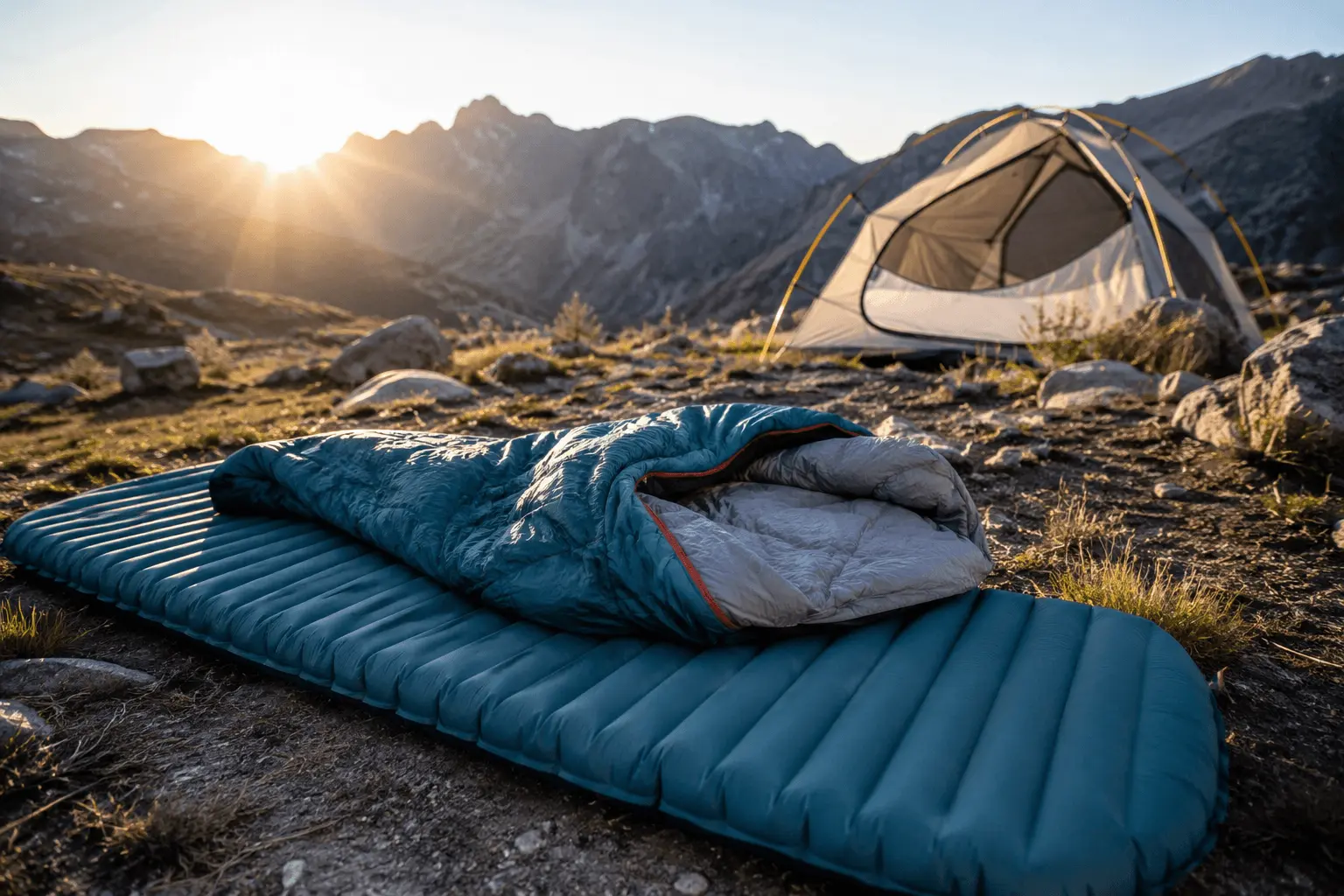
Looking for the best sleeping pad for your next camping or backpacking trip? The right sleeping pad can make the difference between waking up refreshed and spending the night tossing and turning on hard, uneven ground.
Whether you’re planning a lightweight backpacking trip, a weekend of car camping, or a cold-weather adventure, there are several types of sleeping pads to consider. I’ve spent years testing outdoor gear and using sleeping pads while backpacking, guiding, camping, and even living out of a vehicle, so I know how much comfort, insulation, weight, and durability can vary from one pad to another.
In this guide, I’ll break down the main types of sleeping pads and share some of the best sleeping pads for backpacking and camping, including options for different budgets and camping styles.
Quick Answer: What Is the Best Sleeping Pad?
The Nemo Tensor is my top all-around sleeping pad because it offers an excellent balance of comfort, weight, and durability.
If you’re shopping on a budget, the Klymit Static V is a solid inflatable option, while the Stansport Lightweight Foam Sleeping Pad is an inexpensive choice for basic camping and layering.
For car camping, the Exped Megamat delivers exceptional comfort, while the Nemo Switchback is a dependable closed-cell foam option for backpackers who prioritize durability and low cost.
Prices mentioned in this guide are based on the original product information and may change over time.
Types of Sleeping Pads
Before choosing a sleeping pad, it helps to understand the three main types: inflatable, self-inflating, and closed-cell foam sleeping pads.
Each design has different advantages. An inflatable pad can provide excellent comfort while keeping pack weight low, while a foam pad is extremely durable and works well as an extra insulation layer.
1. Inflatable Sleeping Pads
Inflatable sleeping pads have become extremely popular among backpackers because they provide a great combination of comfort, packability, and low weight.
These pads are made from lightweight laminated fabrics and use air to create a cushioned sleeping surface. Many models pack down surprisingly small, making them especially useful when backpack space is limited.
One of the biggest differences between inflatable sleeping pads is insulation. Some are designed specifically for warm-weather camping, while insulated models can provide enough warmth for colder conditions.
The extra thickness also helps smooth out rocks, roots, and uneven ground. After a long day of hiking, that added cushioning can make a significant difference in how well you sleep.
Pros:
- Lightweight and compact
- Comfortable on uneven ground
- Excellent for backpacking
- Many models provide substantial insulation
- Packs down small
Cons:
- Can puncture if used carelessly
- Generally more expensive than foam pads
- Requires inflation
2. Self-Inflating Sleeping Pads
Self-inflating sleeping pads combine open-cell foam and air. The foam is enclosed between fabric layers, with a valve on the side that allows air to enter the pad.
When you open the valve, the foam expands and draws in air. The pad will partially inflate on its own, although you’ll usually need to add a few breaths to achieve your preferred firmness.
A newer self-inflating pad can take several minutes to fully expand, while older pads with compressed foam may require additional inflation.
Despite the name, “self-inflating” doesn’t mean completely hands-free. Most pads still benefit from some additional air to reach their ideal firmness.
For storage, it’s generally better to avoid keeping these pads tightly compressed for long periods. Storing them partially inflated can help maintain the foam’s ability to expand.
Pros:
- Supportive and comfortable
- Easy to inflate
- Good insulation
- More compact than traditional foam pads
Cons:
- Heavier than many inflatable pads
- Bulkier when packed
- Less plush than some air-only pads
- Not as durable as closed-cell foam
3. Closed-Cell Foam Sleeping Pads
Closed-cell foam sleeping pads are the classic camping mats many people picture when they think about sleeping outdoors.
They’re constructed from dense foam and are usually much thinner than inflatable or self-inflating pads. Some models include reflective material designed to improve insulation.
The biggest advantage is durability. Because there is no air chamber, you don’t have to worry about punctures. You can place a foam pad on rough terrain without worrying about it suddenly losing its cushioning.
They’re also lightweight and inexpensive, which makes them useful for backpackers on a budget.
Another advantage is that foam pads can be used underneath inflatable pads. Layering a closed-cell foam pad beneath an inflatable pad can provide additional warmth and protection when camping on cold ground.
Pros:
- Extremely durable
- Lightweight
- Affordable
- No inflation required
- Useful as an additional insulation layer
Cons:
- Less comfortable than inflatable pads
- Bulky when packed
- Takes up considerable space
- Less cushioning
Best Sleeping Pads for Backpacking and Camping
Now that you understand the different sleeping pad constructions, here are some of the best options from the original selection, covering everything from ultralight backpacking to luxury car camping.
1. Nemo Tensor — Best Overall Sleeping Pad
If you’re looking for the best all-around sleeping pad, the Nemo Tensor is hard to beat.
I picked mine up through the REI resale section after my Big Agnes AirCore eventually delaminated. That AirCore had survived two demanding summers of kayak guiding before finally giving out.
I’ve used the Nemo Tensor since 2023 through multiple summers of guiding, backpacking trips, and even a period of living out of my car. It’s continued to perform well, which is why it remains my go-to sleeping pad.
The Tensor offers a strong combination of comfort, low weight, and durability, making it suitable for a wide range of outdoor adventures.
Best for: Backpackers and campers looking for one versatile sleeping pad.
Original listed price: Around $200.
2. Nemo Switchback — Best Closed-Cell Foam Sleeping Pad
The Nemo Switchback is a popular choice for backpackers who want a lightweight and affordable sleeping pad without worrying about punctures.
Personally, I find thin closed-cell foam pads uncomfortable on hard ground. They’re much more enjoyable when camping on sand, soft surfaces, or in warm conditions.
However, the Switchback becomes much more useful when paired with an inflatable sleeping pad. Placing the foam pad underneath an air pad can provide additional insulation, protection, and cushioning.
The main drawback is its packed size. Foam pads don’t compress nearly as much as inflatable sleeping pads, which can make them difficult to pack for activities where space is limited, such as sea kayaking.
Best for: Budget backpackers, durable gear setups, and sleeping pad layering.
Original listed price: Around $55.
3. Rab Stratosphere 4 — Best Value Air Pad
The Rab Stratosphere 4 is Rab’s entry into the value-oriented air sleeping pad category.
Its strongest feature is durability. The pad uses 75-denier polyester fabric, which is relatively thick compared with many lightweight sleeping pads.
It also includes a side-loading stuff sack and comes at a comparatively affordable price.
However, it isn’t the lightest or warmest option available. Its vertical baffles may also be less comfortable than some air-cell or box-baffle designs.
Pros:
- Durable 75-denier construction
- Affordable
- Convenient stuff sack
Cons:
- Not particularly warm for its weight
- Baffle design may be less comfortable
- Basic-feeling plastic valve
Best for: Campers who prioritize durability and value.
Original listed price: Around $140.
4. Exped Megamat — Best Luxury Car Camping Sleeping Pad
For car camping comfort, few things beat a thick, plush sleeping pad like the Exped Megamat.
This pad is several inches thick when inflated, giving it a much more mattress-like feel than most backpacking sleeping pads. It’s particularly well suited to car camping, truck beds, and other situations where weight isn’t a major concern.
I used the Exped Megamat during two summers of living out of a tent while working as a kayak guide, and its comfort made it one of my favorite car-camping options.
If you’re putting it inside a vehicle, make sure the surface underneath is reasonably flat. A platform or additional padding can help eliminate uncomfortable bumps.
Best for: Car campers who prioritize comfort over weight and packed size.
Original listed price: $400+.
5. REI Co-op Traverse Insulated — Best Value
The REI Co-op Traverse Insulated is a strong choice for campers who want a comfortable and durable sleeping pad without spending a fortune.
Its plush sleeping surface and durable materials make it particularly appealing for three-season backpacking and camping. It’s also quieter than some ultralight pads, which is useful if you tend to move around during the night.
The biggest drawback is weight. At around 1 pound 5 ounces for the medium size, it isn’t designed for hikers who count every ounce.
Pros:
- Comfortable sleeping surface
- Durable
- Quiet
- Good overall value
Cons:
- Relatively heavy
- R-value isn’t class-leading
Best for: Three-season backpackers and campers who prioritize comfort.
Original listed price: Around $139.
6. Sea to Summit Ultralight Air — Best Lightweight Sleeping Pad
If keeping your backpack as light as possible is your priority, the Sea to Summit Ultralight Air is worth considering.
The smallest size weighs only about 12.2 ounces, making it an excellent option for lightweight summer backpacking.
Its R-value of 1 means it is primarily suited to warmer conditions. Compared with the Nemo Tensor, it saves a small amount of weight but provides less insulation.
For summer trips where every ounce matters, that tradeoff can make sense. If your budget allows for the Nemo Tensor and you want more versatility, however, the Tensor may be the better overall choice.
Best for: Ultralight summer backpacking.
Original listed price: Around $140.
7. Klymit Static V — Best Budget Inflatable Sleeping Pad
The Klymit Static V is a good option for beginner backpackers who want an affordable inflatable sleeping pad.
At around $70 in the original selection, it offers a relatively inexpensive way to get the comfort and compact pack size associated with inflatable pads.
It weighs just under 1.2 pounds and has an R-value of 1.3, making it better suited to warmer conditions than serious winter camping.
Best for: Beginner backpackers and budget-conscious campers.
Original listed price: Around $70.
8. Coleman Self-Inflating Sleeping Pad — Best Budget Cold-Weather Option
The Coleman Silver Springs Self-Inflating Camping Pad is a budget-oriented option for campers who want additional insulation without paying premium sleeping-pad prices.
The original selection lists an R-value of 5, which makes it considerably more insulated than many basic summer sleeping pads.
The tradeoff is weight. At around five pounds, this is far too heavy for most backpacking trips but can work well for car camping.
Best for: Budget car campers who need additional insulation.
Original listed price: Around $70.
9. Stansport Lightweight Foam Sleeping Pad — Best Cheap Foam Pad
If your main goal is finding an inexpensive and durable sleeping pad, the Stansport Lightweight Foam Sleeping Pad is worth considering.
It’s a basic closed-cell foam design and costs considerably less than most inflatable sleeping pads.
One thing I particularly like about foam pads is their versatility. Beyond sleeping, you can use one as a seat during lunch breaks, an extra insulation layer beneath an inflatable pad, or a protective surface when working around your vehicle or campsite.
Best for: Budget campers, beginners, and backup insulation.
Original listed price: Around $32.
10. Therm-a-Rest Trail ProLite — Best Self-Inflating Sleeping Pad
The Therm-a-Rest Trail ProLite is a good middle-ground option for campers who want the convenience of a self-inflating pad without moving into the heaviest car-camping mattresses.
The smallest model in the original selection weighs about 1 pound 8 ounces and has an R-value of 3.8.
That combination makes it suitable for casual backpackers, paddlers, and car campers looking for additional insulation and comfort.
Self-inflating construction also means you don’t have to manually inflate the entire pad with a pump or inflation sack.
Best for: Casual backpackers, paddlers, and campers looking for a warmer self-inflating pad.
Original listed price: Around $135.
How to Choose the Best Sleeping Pad
The best sleeping pad isn’t necessarily the most expensive or the lightest model. Your ideal pad depends on how and where you camp.
Consider Your Camping Style
If you’re backpacking, weight and packed size should be major considerations. An inflatable sleeping pad is often the easiest option to carry.
For car camping, weight matters much less. A thick self-inflating pad or luxury mattress can provide significantly more comfort.
For rough or rocky terrain, a closed-cell foam pad can be an excellent choice because it doesn’t have an air chamber that can puncture.
Pay Attention to R-Value
R-value measures how well a sleeping pad resists heat loss through the ground.
A lower R-value can work well for warm summer camping, while higher R-values are generally more appropriate for colder conditions.
If you regularly camp across multiple seasons, choosing an insulated sleeping pad with a higher R-value gives you more versatility.
Think About Weight
Backpackers should pay close attention to the weight of their sleeping pad.
Saving several ounces might not seem important by itself, but those savings add up when combined with a lighter sleeping bag, tent, backpack, and other equipment.
For car camping, however, there’s little reason to sacrifice comfort simply to save a few ounces.
Consider Packed Size
Packed size is another major consideration for backpackers.
Inflatable sleeping pads generally pack down much smaller than closed-cell foam pads. Foam pads can take up significant space, especially when attached to the outside of a backpack.
If you’re packing into a kayak or another small vessel, packed size can be even more important.
Don’t Forget Durability
Think about the terrain you’ll encounter.
Inflatable pads are comfortable and compact, but they can be damaged by sharp rocks, thorns, or rough surfaces. A foam pad is considerably more forgiving.
For added protection, some campers use a closed-cell foam pad underneath an inflatable sleeping pad. This creates a versatile system that provides both cushioning and additional insulation.
Should You Buy an Inflatable or Foam Sleeping Pad?
For most backpackers, an inflatable sleeping pad offers the best combination of comfort, weight, and packed size.
A closed-cell foam pad makes more sense if durability, simplicity, and low cost are your top priorities.
You can also combine the two. A foam pad underneath an inflatable sleeping pad can provide extra warmth and protection while giving you the comfort of an air pad.
Final Thoughts
The best sleeping pad depends on where you’re camping, how much you’re willing to carry, and how much comfort you want at night.
For an all-around option, the Nemo Tensor stands out for its balance of comfort, weight, and durability. Backpackers on a tight budget may prefer the Klymit Static V, while the Nemo Switchback is a simple and durable foam option.
If you’re primarily car camping, the Exped Megamat is the clear choice when comfort matters more than packability.
Whatever you choose, don’t underestimate the importance of a good sleeping pad. A quality pad not only cushions you from the ground but also helps insulate you from cold temperatures and can make a huge difference in the quality of sleep you get outdoors.
The best sleeping pad is ultimately the one that matches your camping style, sleeping preferences, budget, and the conditions you’ll encounter.