
Why the Right Pack Changes Everything
I spent years working outdoor retail, guiding as a sauna guide, pulling shots as a barista, and logging trail time across the Midwest and West Coast before I became a full-time outdoor writer. That kind of hands-on experience taught me one thing fast:
Hiking packs aren’t one-size-fits-all, and you don’t need a closet of backpacks to hit the trail happily. I sort them into 3 simple types: backpacking packs, daypacks, and summit packs and James and I rotate through all three depending on whether we’re headed out for weekend hikes or tackling long-distance treks.
A great pack should wrap around your body like a gentle hug, hold your gear with smart features and enough space to keep everything organized, and let you carry weight comfortably mile after mile.
Even my dad, who owns way more gear than any one person needs, will tell you it comes down to finding a system that works for you, not owning every option on the shelf.
A good backpacking backpack gives your shoulders and hips real support, spreading the load so your balance stays steady even when the trail gets rough, and smart packing habits matter just as much as the backpack itself.
I’m 100% committed to helping people get outside with less struggle and more enjoyment, because getting fit and the outdoors experience right changes everything about how far and how happily you can go.
Quick Answer: What Is the Best Hiking Backpack?
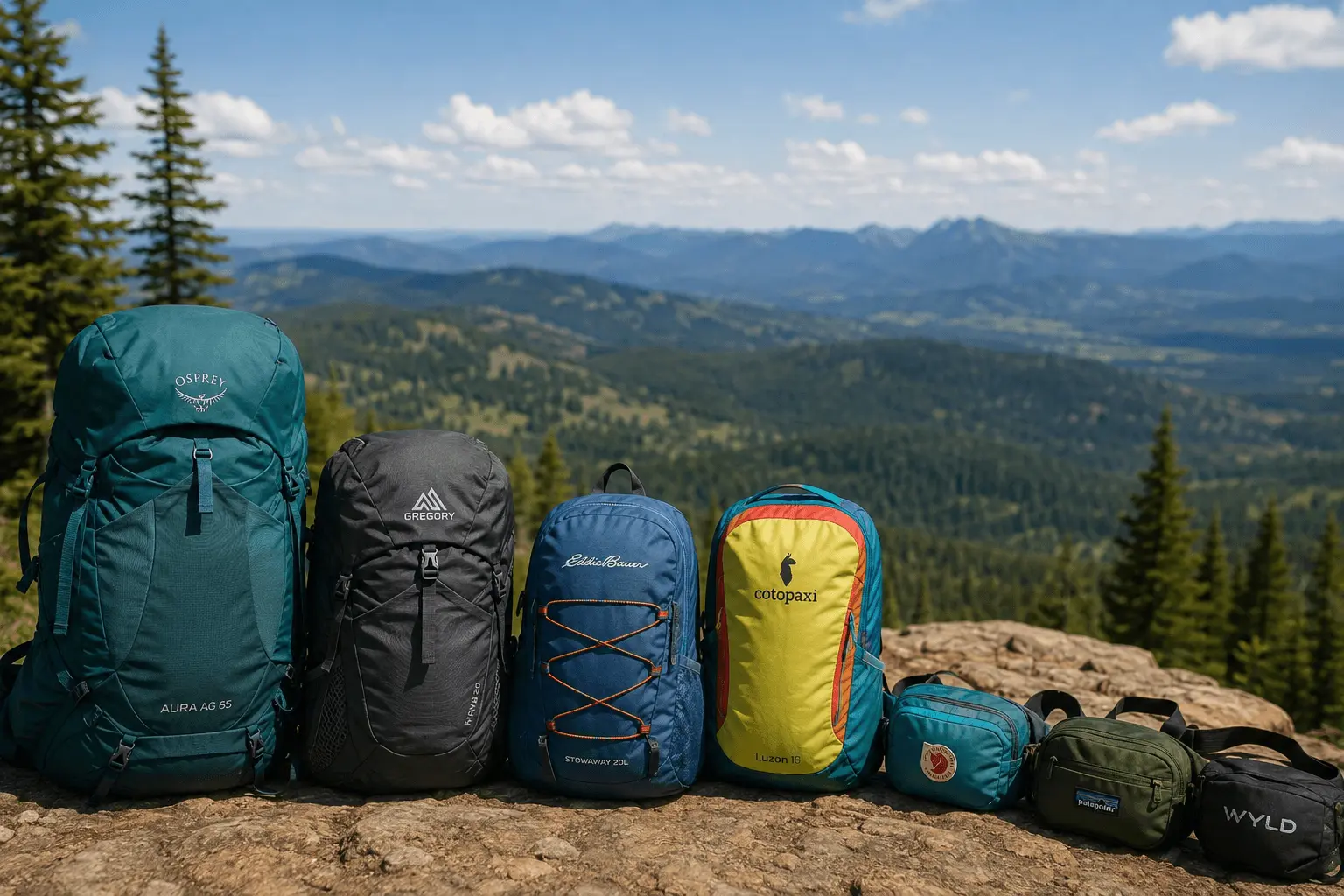
The best hiking backpack depends on your trip length, budget, and how much gear you carry. For day hikes, Gregory day packs and the Eddie Bauer Stowaway (a budget favorite) offer great comfort and storage.
For multi-day backpacking, the Osprey Aura stands out for its industry leading warranty and support, while Granite Gear and Wild Brush’s Glow Pack are excellent lightweight, ultralight-friendly options.
Cotopaxi and High Sierra provide solid mid-range alternatives, and hip packs or fanny packs work well for short, casual hikes near home. Choosing the right pack ultimately comes down to matching capacity, comfort, and features to your specific hiking style.
Best Hiking Backpacks and Packs
Whether you’re headed out on a quick hike or gearing up for a long haul, I’ve put together the best packs for your hiking adventures, along with everything you need to know to choose the right back for you.
1. Gregory Day Packs
Gregory builds some of the best day packs on the market today, and I reach for their Day Packs whenever I want reliable comfort without overthinking my gear. Their lineup even covers plus sized hiking backpack options, which matters because not every hiker fits the mold packs usually get designed for. I’ve tested the Maya 20 and its bigger sibling, the Maya 20 Plus, and both deliver a solid backpack with plenty of pockets and a build that stays compatible with a water reservoir.
A 20L size hits that sweet spot as a good backpack size for most day hikes, letting you comfortably stash snacks, water, maps, a compass, your camera, a first aid kit, and extra layers without straining the seams.
Pros:
These packs shrug off wear and tear far better than most, and Gregory backs that durability with ample storage space across their models. You’ll also find several sizes to choose from, plus good ventilation along the back panel that keeps you comfortable even over long periods of time, since the chafe-free design spares your shoulders the usual rubbing.
Cons:
I’ll admit these packs turn difficult to squeeze into a carry-on, and the price point sits higher than a lot of competing options on the shelf.
2. Eddie Bauer 20L Stowaway — Best Budget Hiking Backpack
I count the Eddie Bauer 20L Stowaway as the Best Budget hiking backpack on the market, and I say that with confidence because I’ve owned mine for eight years and it’s still the bag I grab first for day hikes. The biggest perk is how flat it packs down, which makes it perfect for tucking into a carry-on when I’m travelling light. It’s also an incredibly easy pack to customize.
I sewed on elastic straps myself to strap a foam sleeping pad on for longer day hikes, giving me a spot to sit whenever I need a break. With my current modifications, I’m genuinely convinced I could stretch this bag into an overnight trip; that part’s still TBD, and I’ll update once I’ve tested it.
Pros:
It’s Inexpensive, fully collapsable, highly customizable, and tougher than it appears.
Cons:
It offers very little back support or cushion, the shoulder strap padding is limited, and while it stays comfortable on half day hikes, anything past four or so hours starts to leave something to be desired.
3. Cotopaxi Luzon
The Cotopaxi Luzon, at 18 liters, earns its spot as another excellent hiking backpack for day hikers, and I like it for being both fully collapsable and highly adjustable. I reach for this backpack when I want to pack for half day hikes, though it holds up just fine if you push it into a full day out too. My only reservation with this backpack is the lack of side holders for water bottles, so your water bottle ends up stored inside the pack while you’re hiking, which isn’t ideal if you like quick access to water.
Pros:
It’s Inexpensive, fully collapsable, and offers a bit of rigidity in the shoulder straps, plus a Medium amount of storage for a pack this size.
Cons:
It comes with very little back support or cushion, and I’ve found it grows uncomfortable on hikes longer than a few hours.
4. Hip Packs and Fanny Pack Options
For shorter hikes, I skip the full backpack entirely and grab a hip pack or fanny pack instead, clipping a water bottle right onto the strap for quick access. My Wyld Jules Hippack has plenty of room for a frugal full day hike, while my Fjallraven Hip Pack works more like a wallet, sunscreen, granola bar, and chapstick situation where you just strap your water bottle on and go my Patagonia Ultralight hip pack handles essentially the same kind of load.
Hip-packs and fanny packs are close to ideal for the casual hikes (really just walks, if I’m honest) I take near home, and near home makes up a surprising share of my hiking life since I’m lucky enough to live up on Lake Superior. I also love pairing a hip pack with my ultralight backpack on backpacking trips or longer day hikes when I want to come prepared; I treat the hip pack as an add on to my backpacking bag because it gives me the perfect place to keep my first aid kit and some emergency snacks.
Pros:
It’s inexpensive, a versatile set up, easy to pair with an additional hiking pack, and stays Lightweight and comfortable.
Cons:
Limited space.
5. Osprey Aura Backpacking Bag
The Osprey Aura, a Backpacking Bag built at 65L, stands out as the large hiking backpack I’d point hikers toward if they want to tackle multi-day backpacking trips that stretch longer than three days. Or, alternately, this same backpacking back works just as well for shorter backpacking trips when you’d rather bring a few luxury items along instead of stripping down to bare essentials.
Pros:
Osprey backs it with what I’d call the best warranty policy in the outdoor world, so you’re basically guaranteed a pack forever. The build quality speaks for itself too: High quality, genuinely comfortable packs with storage space that outperforms most competitors.
Cons:
The Up front price on Osprey packs runs high, so you’re paying for that reliability upfront.
6. High Sierra Pathway
High Sierra makes a genuinely solid day hiking backpack option for hikers, and I mean that as real praise, not a backhanded compliment. Their backpacks offer similar functionality to a nice Osprey or Gregory pack, but at a cheaper price point BUT here’s the catch: Osprey and Gregory carry far better warranty policies, while High Sierra only covers manufacturing defects beyond normal wear and tear.
Osprey packs, for example, come with an incredible warranty policy, to the point where you might never need to buy another pack again after your first purchase.
Pros:
High Sierra packs feel spacious, hold up well against higher-end hiking backpacks in construction and comfort, all for a cheaper price.
Cons:
It does not come with the same warranty policy as other packs, and anecdotally, it doesn’t hold up to wear and tear at the same level as some of the more expensive packs out there. Still overall a solid B+ bag.
7. Granite Gear Ultralight Packs
If you want a perfect hiking backpack that can do it all, look no further than Granite Gear — specifically a 30-50 L backpack from their lineup. The Crown 3 40, for example, is a great pick, offering a comfortable ultralight set up that doesn’t skimp on function. Granite Gear is based in Minnesota, and I’ve found their high-quality packs are designed to last a long time.
The thing I love most about my 35L Granite Gear backpack is that it hits the perfect size for ultralight backpacking or weekend trips, without running so large that it’s hard to fill for a simple day hike. My own pack is discontinued now, but the Crown 40 is a very close match if you’re shopping today.
Pros:
It’s Lightweight and comfortable for long distances, works as a great cross over pack for backpackers or long day hikes, and delivers Excellent storage with good back ventilation and a HIGHLY adjustable fit.
Cons:
It’s Not a good fit if you’re only after casual day hiking backpacks — Other than that, I’d pick this first.