
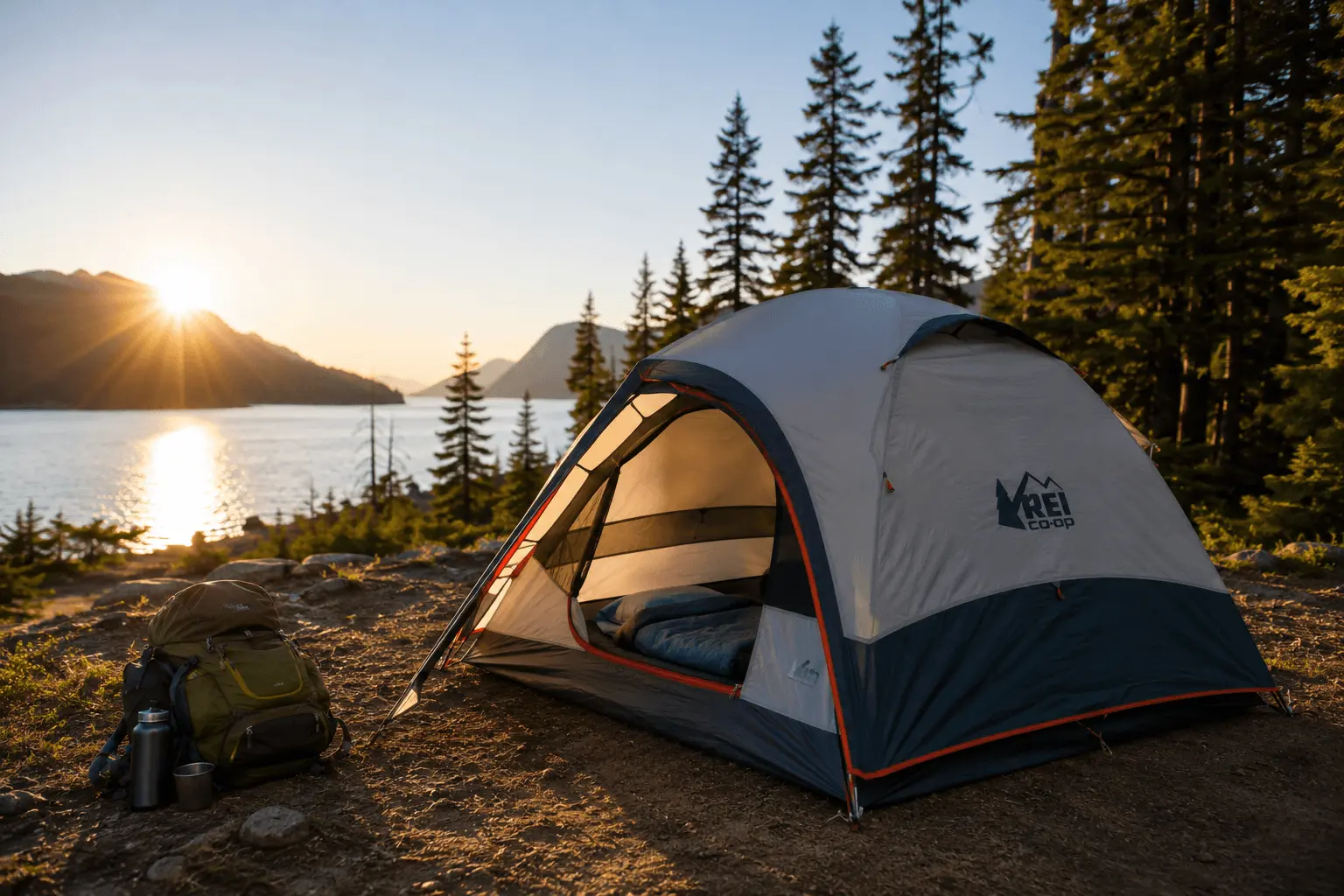
Choosing a tent feels overwhelming until you break it down to what actually matters. I’ve pitched dozens of shelters on rocky ground, sandy riverbanks, and everything in between, and I judge every camping tent the same way: how well does it hold up when the weather turns nasty? A good camping tent becomes your home away from home, whether you’re deep in the wild on a multi-day trek or parked at a drive-up site.
Our expert team spent 2026 testing shelters built for every style of adventure — backpacking trips that demand light packs, canoe camping runs where every ounce in the boat counts, and car camping weekends where you can afford a little extra bulk for comfort.
We tested each tent under real storm conditions, not just in a showroom, because that’s where cheap zippers jam and poles snap, turning a relaxing trip into a frustrating fight with your gear.
Once you’ve narrowed down your options, look past the marketing and dig into how each tent was actually rated. Our in-house photo galleries show every tent photographed side by side, so you can see interior space, storage pockets, and overall build quality before you buy.
We compared setups on ease of use, because nobody wants to wrestle with confusing instructions after a long day on the trail. Weather protection and a stable surface connection matter just as much as price — a cheap tent that lets in unexpected leaks costs you more in ruined gear than a slightly pricier option built to last.
And don’t underestimate the emotional payoff: there’s nothing like unzipping the door on a clear night and watching stars stretch across the sky before drifting into a cozy night of real rest inside proper shelter. That combination of function and feeling is exactly what separates the best camping tents from the rest.
Quick Answers
The best camping tent depends on your adventure style, budget, and weather conditions. The REI Half Dome 2+ is a top choice for beginners because it offers comfort, durability, and easy setup. Backpackers who need lightweight gear can choose options like the MSR Hubba Hubba 2, Big Agnes Fly Creek HV UL 2, or Durston X-Mid Pro 1.
For family and car camping, larger tents like the REI Wonderland 6 provide extra space and comfort. Before buying, consider tent weight, capacity, waterproofing, ventilation, setup process, and storage space. A quality camping tent protects you from harsh weather and makes outdoor trips more enjoyable. The right tent should match your camping style and provide reliable shelter for years.
How to Choose the Best Camping Tent for Beginners
-
- Start With Your Camping Activity
- Choose a tent based on how and where you plan to camp.
- Backpacking trips: Select a lightweight tent that is easy to carry and quick to set up.
- Car camping or base camping: Choose a larger tent with extra space for comfort and gear storage.
- Canoe, pack rafting, and kayak camping: Look for tents that pack small but remain durable.
- Sea kayak camping: Choose lightweight and weather-resistant options for coastal conditions.
- Consider Your Camping Location and Weather
- Weather conditions play a major role in choosing the right tent.
- For rainy or stormy areas, select a tent with strong waterproofing and a reliable rainfly.
- For sandy locations, a freestanding tent works better because it does not depend heavily on stakes.
- Match your tent features with your expected environment.
- Choose a Tent Based on Your Budget
- A higher price does not always mean better performance.
- Budget tents can still work well for beginners.
- Affordable tents are often heavier and bulkier compared to premium models.
- More expensive tents may offer better weight, durability, and convenience.
- The REI Half Dome 2+ is an example of a balanced option between price, comfort, and weight.
- Focus on Comfort Features
- Small features can greatly improve your camping experience.
- A large vestibule provides extra space for storing wet or dirty gear outside your sleeping area.
- Two doors make it easier for multiple people to enter and exit without disturbing each other.
- Ventilation features help reduce condensation and improve airflow.
- Extra interior space makes longer camping trips more comfortable.
- Start With Your Camping Activity
- Final Tip for Beginners
-
- The best camping tent is the one that matches your activity, location, weather, and comfort needs.
- Choosing the right tent makes camping easier, more enjoyable, and less stressful.
REI Halfdome 2+: Built for Real Beginners, Not Just Marketing Photos
I still remember my three-week fall expedition paddle through Isle Royale National Park with my partner, and the REI Halfdome carried us through every mood the sky could throw. One night, the sky sleeted on us, then thunderstormed so violently that I watched falling trees and genuinely worried we’d get crushed.
The next morning, the tent stood completely undamaged and bone-dry inside, and that’s when I knew this tested and true tent earned its reputation as the best tent for anyone starting out. If you’re planning a canoe or kayak camping trip and want to share a tent with someone, the double door entrance makes entering and exiting so much easier, you won’t be climbing over each other at 2 a.m. to pee.
At just over 5 pounds, the weight can be divided between two people for a backpacking trip, landing at roughly 2.5 pounds per person, a genuinely reasonable weight for anyone at a beginner level heading out for 2-3 night trips.
The vestibule space is adequate for gear storage, and at $360, the price reflects real quality, not hype. Before you head out, watch the setup video online; most negative reviews trace back to improper setup, not the tent itself. Pick a flat spot on higher ground, away from where water collects, because even the sturdiest tent gets wet and washed out if a rainstorm turns your site into a river.
What to Know Before You Buy
Waking up to dew on your rainfly every morning while camping is completely normal, so don’t panic thinking your tent is tent leaking; that’s just condensation from your own breathing overnight, and staking out your tent properly to keep the rainfly away from the bug net cuts down on that discomfort fast.
Here’s something I wish I’d known earlier: the REI brand doesn’t back its gear with a lifetime warranty the way brands like Nemo and Big Agnes do, where they’ll literally replace a broken product years later, no questions asked. I’ve also noticed that newer REI products don’t always feel as structurally sturdy as their counterparts, so quality can genuinely be hit or miss depending on the batch you get.
Still, if you want a jack-of-all trades tent to get into the outdoors a little more seriously, the half dome remains my first purchase recommendation, since you’ll get plenty of mileage out of this one tent alone; it’s easily the best all-around tent on the market for beginner campers who want to car camp, backpack, and everything in between.
MSR Hubba Hubba 2 : A Pricier Pick with a Proven Reputation
I’ll admit the MSR Hubba Hubba 2 costs more expensive than the Half Dome, but once you pick it up at just 3 lbs 4oz packed weight, that splurge starts making sense fast, and the excellent reviews back it up as one of the best backpacking tents on the market for couples or small groups.
MSR carries a reputation for superior longevity in its gear that outpaces REI branded products, backed by a comprehensive warranty policy that gives you real peace of mind, and I’d call it a great backpacking tent for adventurers who want a high quality tent built to last.
I put that longevity to the test myself on a 70-day British Columbia sea kayaking expedition, where Andy and I relied on an MSR Remote 3, the mountaineering version of the Hubba Hubba; it runs significantly more expensive, but after living in it through all weather while paddling for two months straight, I can tell you it was worth it, and I’d recommend it almost exclusively for winter camping or expedition style trips.
Big Agnes Fly Creek HV UL 2 : A Proven Lightweight Champion, Tested Over Years, Not Just Seasons
I’ve put the Big Agnes Fly Creek HV UL 2 through more abuse than any best backpacking tent on the market probably deserves, and after seven years of heavy use, it’s still standing strong. This tent survived five seasons of overnight kayak guiding across the Apostle Islands and San Juan Islands, trekked with me through Armenia and the Border Route Trail, and served as my home base during a 3-week expedition paddle.
I’ve mostly gone solo with it, though I’ve shared it a handful of times, finding it works better with a small woman than with my taller partner, but it’s doable in a pinch. After that most recent stretch of overnight kayak guiding, the shock cord started losing tension, though not enough to make the tent unusable; it’s still perfect for backpacking, and my one real hesitation using it for sea kayak camping is that it’s not freestanding and needs to be staked out for a successful night.
Even fully set up, this tent has weathered storms strong enough to take out neighboring trees, along with hail, which I unfortunately know firsthand, and I’ve even taken it out in the snow. At $400-$450, it sits in medium pricey territory, but at just 2 pounds, it’s a solid choice for any solo backpacker or paddler hunting for a long term tent setup.
The pros speak for themselves: easy setup, warm, durable, lightweight, and good price for value. On the flip side, it’s not free-standing, and the space might not be adequate for taller folks.
Durston X-Mid Pro 1 : The Ultralight Tent That Doesn’t Feel Like a Compromise
I was gifted this tent, and honestly, the Durston X-Mid Pro 1 might be the ultimate ultralight solution for anyone backpacking who wants something storm-ready and easy-to-pitch without sacrificing comfort.
My original plan was to save it strictly for my six-day backpacking loop on the La Cloche Silhouette Trail, treating it as a special-occasion tent only when ultralight was a true necessity, but it turned out to be so easy to pitch, so roomy inside with spacious vestibules, and so sturdy even in rough weather that I now reach for it on shorter trips too, even when weight isn’t a dealbreaker.
It’s a single-wall Dyneema trekking pole tent that sets up with just four tent stakes and weighs in at less than one pound, so if you’re after the ideal setup for long walks in the woods, this tent genuinely delivers.
Nemo Dragonfly 2 : The Comfort-First Cousin to the Fly Creek
At $550, the Nemo Dragonfly 2 runs more expensive than the Fly Creek and comes in slightly heavier, but it makes up for that with freestanding setup and noticeably more livable space inside.
The double door exits add increased comfort you won’t get elsewhere, and even though it’s freestanding while the Fly Creek isn’t, functionally these two are an extremely similar tent at their core.
I’d point anyone hunting for a small lightweight tent to use solo toward the Fly Creek instead, while the Dragonfly makes far more sense if you want real comfort at camp and the option to share the tent with a second person.
On the plus side, you get easy setup, warm performance, real durable build quality, and those handy double doors. The only knock against it is that there are lighter-weight options on the market, but even so, this tent remains a genuinely solid choice.
Kelty Late Start 2 : Proof That Budget Doesn’t Mean Flimsy
If you’re hunting for the best cheap backpacking tent, the Kelty Late Start 2 delivers at just over 4 pounds packed weight for only $160, making it easily the best budget backpacking tent on the market today.
It features single door entry, comes free standing, and is extremely hardy; I know because we hand these tents to guests at the outfitter where I guide overnight sea kayaking trips, and nothing tests the longevity of a tent quite like letting inexperienced strangers use them every single day of the summer.
I’m happy to report they’ve held up great through it all. This tent works well as a roomy solo hiker/paddler tent, but it also offers a genuinely comfortable night for two people, arguably more so than the Fly Creek.
The Late Start also sets up and breaks down fast, since it’s extremely easy to set up, tear down, and freestanding. For anyone who’s a true solo budget backpacker, the Late Start 1 comes in at $130 and 3.5 pounds, rounding out the Kelty line as the best budget-friendly backpacking tent you can buy.
On the plus side, you get easy setup, durable freestanding construction, and genuine affordable pricing. The trade-offs are that it runs heavier than more expensive options and comes with single doors instead of double.
REI Wonderland 6 : What It’s Really Like to Live in This Tent for a Season
I spent an entire summer proving that the REI Wonderland 6 might be the best car camping tent for long trips, and I mean that literally: my partner and I live inside one from May to September while guiding overnight sea kayaking trips, only living in different tents on the days we were actually out guiding, a stretch of life I documented under #tentlife.
Live inside a space this awesome and you notice details fast; we fit two side by side queen air mattresses with room to spare, though most nights it was really just one mattress plus a stack of stacked storage bins along the wall.
The ceiling stands tall, the zip-able vent windows keep substantial airflow moving through even on sticky nights, and adding the mudroom attachment turned the whole setup into a covered outdoor living space where we set up camp chairs, a table, and more stacked locking bins to build an honest kitchen.
Over several months camping like this, it down poured on us more than once, sometimes with high winds and hail mixed in, and the tent stayed completely livable and bone dry the entire time, barely moved even in the biggest gusts.
For long term camping, this tent earns its keep: yes, it takes real time and effort to set up, but for camping stays longer than a week it’s absolutely worth it, and honestly, for anything shorter it feels like overkill — that’s when I’d point you toward the REI Wonderland 4, slightly smaller, or the Wonderland X if you’re living out of it for field work instead.
On paper the pros are simple: excellent weatherproofing, extremely spacious. The cons are just as real, though — the involved setup, the fact that it might be too big for some campgrounds, and other reviews that flag y-pole defects.
I don’t usually put much stock in negative reviews on outdoor gear, since so much of it comes down to user errors, but enough purchasers have complained about poles snapping that it’s worth mentioning here too.
Our own tent held up fantastically for five months of continuous use, but when we were tearing down at the end of the season, I noticed one pole had bent, exactly the kind of potential defect those reviews were talking about.
If I ever find myself wanting to live in a tent for a whole season again, I’ll probably invest in a canvas wall tent with a wood burning stove, or maybe a bell tent setup instead, since canvas breathes better than nylon and genuinely feels more like a home. 2025 EDIT: JK actually lived in a canvas wall tent last summer, and compared to that, the REI Wonderland gave an INFINITELY better experience — better temperature regulation, more critter proof, and those zip off windows turned out to be an absolute lifesaver.
Hennessey Hammock Expedition: For When You’d Rather Hang Than Pitch
If you’re not set on a tent at all, hammock camping has gained popularity everywhere there are trees to hang from, and it’s easy to see why once you try it. You get a larger variety of usable tent pads available since you’re not tied to flat ground, there’s real potential for the driest set up out there, and with a little practice, your comfort only improves the more you dial in your increased comfort.
The Hennessey Hammock Expedition is tested and true, weighing in at just over two pounds and running only $160, making it the cheapest ultralight sleep system on the market today.
Coleman Skydome Darkroom 6P : Built for Sleeping In, Literally
The Coleman Skydome Darkroom 6P comes in at a weight of 19 lbs 7.8oz, with floor dimensions of 150 x 120 inches and a peak height of 72 inches, though it doesn’t come with a footprint included, so you’ll want to grab one separately if you want extra floor protection; price runs at $390.
If you’re someone who wants to block out light for better sleeping or cut down on hot tents baking in the sun, this tent genuinely delivers, since it blocks out 90% of light while staying easy to set up and very affordable. The trade-off is that it only has one door and doesn’t offer much in the way of storage pouches/pockets.
Marmot Limestone 4P and 6P Tent : Room to Breathe, Pockets for Everything
The Marmot Limestone comes in two sizes to fit your crew: the 4 person version runs a weight of 10 lbs 12.6 oz, with floor dimensions of 100 x 85.8 inches, a peak height of 63 inches, no footprint included, and a price of $354.73, while the 6 person version steps up to 15 lbs 12.7 oz, stretches out to 120.1 x 100 inches, reaches a peak height of 76 inches, and comes in at $479.
Both sizes feel genuinely spacious and easy to set up, with large vestibules that give you room without feeling not overwhelming; I especially love that the doors unzip in two directions and zip completely open, letting you tuck the screen door into a pocket for easy ease of access and unobstructed views, which makes this tent wonderful in shoulder seasons when you just want to let the air in through both sides of the tent.
There are plenty of clips to hang your stuff, and the great pocket assortment includes two tiny triangle pockets on the ceiling that are perfect for glasses, plus more pockets on all sides of the floor for everything else. For car camping, there’s really nothing to complain about, though the tent runs shorter than other options out there, so adults can not stand in it, and if you’re planning to use it for backpacking, know that the weight is a bit heavy, though still doable.